
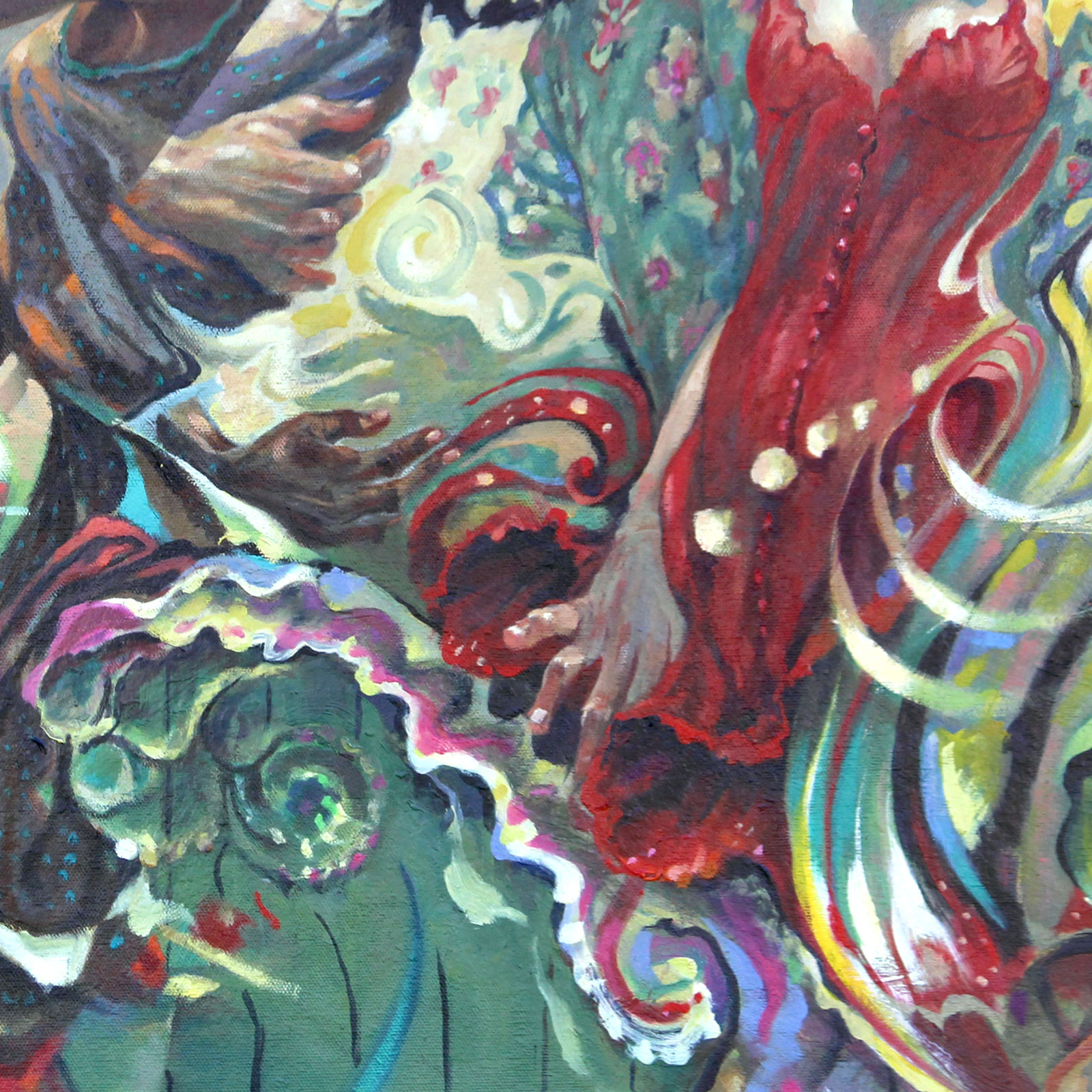
When we train as artists we learn to draw what we physically see, how to use color, anatomy, etc. And when we say realism we understand it to mean a certain form or visual language to render reality. One that captures the world similar to a photograph.
Lately I have been experimenting with other ways to express that same reality.
When i look out the window this morning at the beautiful falling leaves, how best do I paint what I see but also what I feel? Do I paint a representation of the scene as a camera would see it? Do I echo the motion, the dance of the falling leaves in moving paint? Do I dissolve the tree structures in saturated paint to express the power of the autumn color I see? How to paint this?
So realistic rendering is one language, if you will. Do I want to try to wedge the things I experience into this one universal visual language? Or do I want to speak in a different more personal language? Personal to me, but perhaps also personal to the language of the experience.
Thinking of language–when I read a translation of a Neruda poem, I’m getting the gist of the plot and hopefully the intent of the poet. But I will probably get more, and closer to the poets original poetic depth, rhythm and flow if I read Neruda in his original Spanish.
This is what I mean about realistic painting. It is a universal language. Render a subject well, and people across the world will see what you intended. But by rendering it in straight realism, if you will, am I sacrificing some of the experience that I wanted to portray, by wedging it into a universal language? Will I get closer to the feeling I want to express if I essentially invent new forms of paint language that conform to this specific experience?
In doing so–making up my own paint pig(ment) Latin–I am probably making the visual language feel foreign to some viewers. I am potentially losing audience.
However, I think, I hope, if I do the new language well enough, some folks may take the time to understand this different tongue.